
A hollow-sounding render can be concerning, especially when cracks, damp patches or loose areas are also visible. A simple tap may raise questions about whether the render has failed, is at risk of falling away or is simply affected by the way it was installed.
BBS Rendering helps understand what hollow sounds can indicate and when further investigation may be needed. Identifying the cause early can help determine whether the affected area can be repaired locally or requires more extensive work.
Understanding the difference between harmless variations and genuine debonding is important when considering render repairs in Newcastle. Knowing what causes render to become hollow, how to recognise warning signs and which repair options are appropriate can help protect the wall and prevent further deterioration.
What Hollow-Sounding Render Means
A hollow-sounding render usually indicates that the render has lost some of its bond with the underlying substrate. When tapped, a section that has separated can produce a drum-like or echoing sound because there is a small void or poorly bonded layer beneath it.
A hollow sound does not automatically mean the entire render system has failed. Small, isolated areas may sound different because of variations in thickness, joints, beads or the construction of the render system. However, hollow areas accompanied by cracking, bulging, movement, crumbling or damp staining are more likely to indicate genuine debonding and should be assessed.
If a hollow area expands or begins to move, the risk of cracking, water ingress and eventual detachment increases. This is important on elevated walls, around entrances, windows, balconies and other areas where falling render could create a safety hazard. The extent and condition of the affected area should be considered before deciding whether to monitor it, repair it locally or remove and replace the render.
Why Render Separates From the Wall
Render separates from the wall when the bond between the coating and its substrate breaks down. This creates a void behind the render, producing the hollow or drum-like sound heard when the surface is tapped. Several factors can contribute to this, including:
- Poor substrate preparation: Dust, loose paint, algae, efflorescence and friable old render can prevent proper adhesion. Smooth or low-suction surfaces may also require an appropriate bonding or key coat.
- Moisture ingress: Water entering through damaged gutters, cracked parapets, failed seals or other openings can become trapped behind the render. Repeated wetting and drying can weaken the bond and contribute to further debonding.
- Substrate movement: Cracks or movement in masonry, or movement between different building materials, can place stress on the render and eventually break its bond with the wall.
- Incorrect mix or application: Render that is unsuitable for the substrate, applied too thickly or mixed incorrectly can be more vulnerable to cracking and separation.
- Poor curing conditions: Rapid drying caused by hot weather, strong wind or direct sunlight can increase shrinkage and place stress on the developing bond.
Once debonding starts, moisture and movement can cause the affected area to spread. Identifying the underlying cause is vital before deciding how the render should be repaired.
How to Check Whether Render Is Hollow or Loose
A basic inspection can help identify areas that may have lost their bond with the substrate. The tap test is useful for locating suspect areas, but it cannot confirm the cause or extent of the problem on its own. Avoid striking the surface heavily, where the render is cracked, bulging or positioned above areas where falling material could cause injury.
- Tap the surface gently: Use the handle of a light tool or another blunt object to tap across the render. Compare suspect areas with sections that appear sound. A noticeably hollow or drum-like sound can indicate a void or loss of adhesion.
- Check for movement: Where safe, gently press the area with your palm. Sound render should remain firm, while debonded sections may feel springy or move independently. Do not push hard or attempt to pull the render away.
- Look for warning signs: Check for cracks, bulges, open edges, crumbling sections, damp staining or efflorescence. These can indicate that hollowing is associated with a wider defect.
- Mark affected areas: Where practical, mark the boundary of hollow-sounding sections with chalk or a removable marker. This can help establish whether the problem is isolated or extending across a larger area.
- Seek professional assessment: Widespread hollowing, movement, significant cracking or signs of moisture should be assessed by a suitably qualified professional.
The change in sound is more useful than the exact tone because render systems vary in thickness, composition and construction. A tap test can identify areas of concern, but repair decisions should also consider the render's stability, visible condition and the state of the underlying substrate.
Other Signs of Loose or Drummy Render
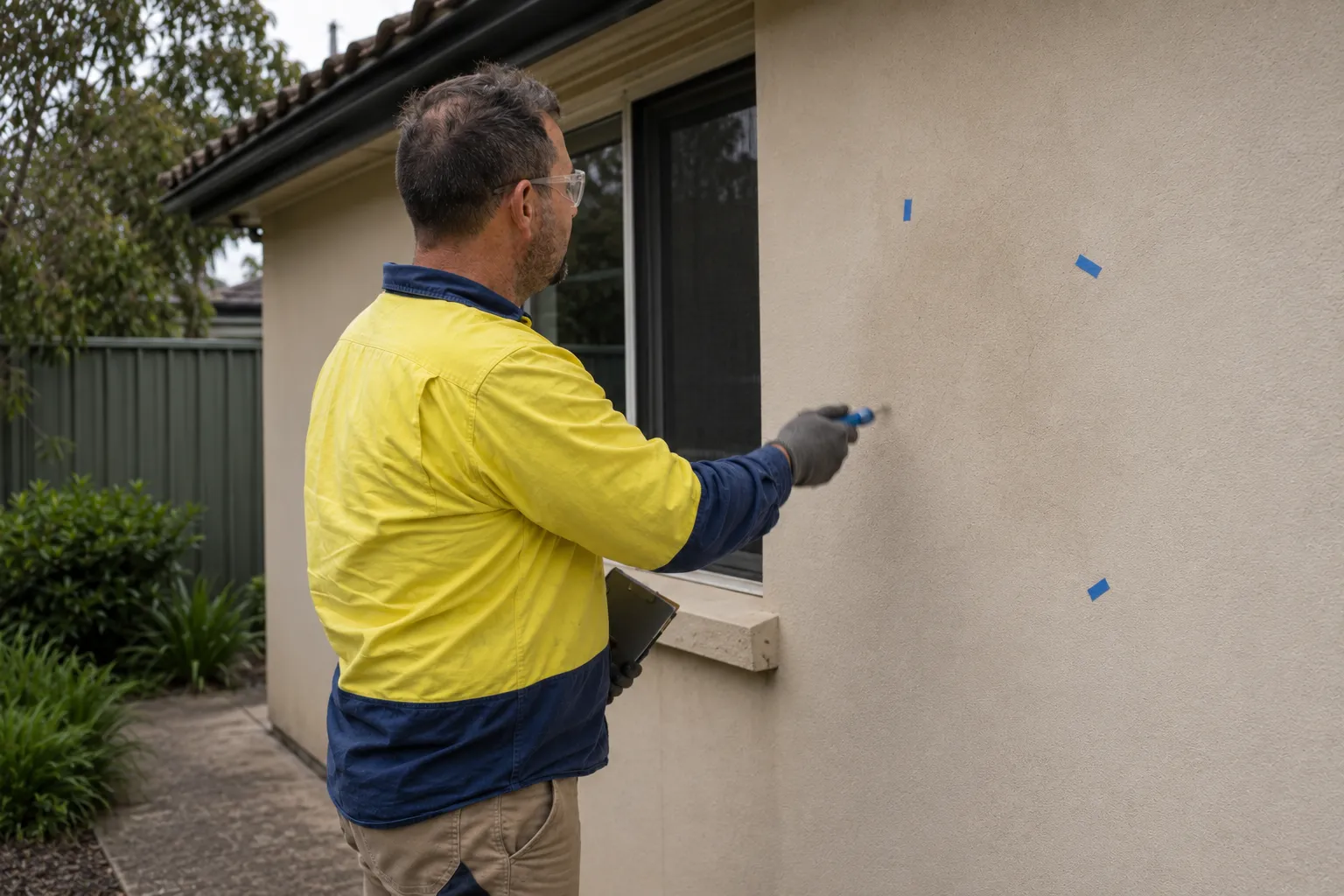
A hollow sound is often the first indication that render has started to debond, but other visible and tactile signs can help confirm whether there is a wider problem. Identifying these early can help prevent further deterioration and unexpected detachment.
Cracks and Gaps
Cracking around a hollow area can indicate that the render is moving independently of the substrate. Fine surface crazing can occur from normal shrinkage, but wider or developing cracks are more concerning.
Understanding the common causes of cracked cement render can help determine whether cracking is limited to the surface or connected to movement, moisture or bond failure beneath it.
For recently completed residential work, the NSW Guide to Standards and Tolerances provides homeowners and builders with a reference for minimum technical standards and acceptable workmanship.
Gaps around windows, doors, corners and joints can also indicate separation. Edges that lift or flex when gently pressed should be treated as possible signs of debonding.
Bulges and Movement
Bulging, rippling or uneven sections can indicate that render has detached and is spanning a void behind the surface. Debonded areas may feel slightly springy or move differently from the surrounding wall.
These changes can be subtle, particularly with thin-coat or insulated render systems, so noticeable differences in surface movement or firmness should be investigated.
Damp Marks and Loose Edges
Dark staining, persistent discolouration and white salt deposits known as efflorescence can indicate moisture has entered behind the render. Exposed walls and areas around poorly sealed windows, roof drainage or other junctions can be vulnerable to repeated moisture.
Crumbling edges or small fragments breaking away around corners, sills and the base of a wall are also warning signs. When these occur alongside hollow sounds, cracking or movement, the render may require professional assessment.
Does Hollow Render Always Need to Be Removed?
No, a hollow render does not always need to be removed. Small, isolated areas may remain stable if the render is firmly held around the affected section and there are no signs of cracking, bulging, movement or moisture ingress. Depending on the render system and its condition, monitoring or a localised repair may be appropriate.
Removal is more likely to be necessary when the render is loose, flexing, bulging, crumbling or extensively debonded. Widespread hollow areas, ongoing moisture problems, a deteriorated substrate or a risk of falling render are also strong indications that the affected material should be removed.
Simply applying paint or another layer of render over a hollow section will not restore its bond with the wall. The defective area needs to be assessed so the underlying cause can be addressed and the appropriate repair method selected. Where practical, sound render can be retained while only failed sections are removed and replaced.
Can Hollow Render Be Repaired Without Removing It?
Yes, in some cases, hollow render can be stabilised without removing the entire affected area. Small, stable sections that remain firmly bonded around their edges and show no cracking, movement or moisture damage may be suitable for a specialist repair method.
However, loose, bulging, crumbling or extensively debonded render needs to be removed. Applying a new coating over failed render will not restore its bond with the wall and may leave an unstable layer underneath. Where possible, only defective sections need to be removed, allowing sound surrounding render to remain.
The underlying cause must also be addressed for the repair to last. Moisture ingress, substrate movement, poor drainage or failed seals can cause the render to become hollow again if they are not resolved. A professional assessment can determine whether stabilisation is appropriate or whether removal and re-rendering is the better option.
When Repair or Re-Rendering Is Needed
The appropriate repair depends on the extent of the hollow area, the condition of the render and substrate and whether cracking, movement or moisture is present. Small, stable areas may only need localised repairs, while widespread or actively failing render requires more extensive work.
When Local Repair Is Enough
Localised repair may be suitable when hollow areas are small, isolated and surrounded by firmly bonded render. There should also be no movement, bulging or ongoing moisture problem.
The appropriate approach to render repairs for older Newcastle homes also depends on the original materials, the condition of the substrate and how the building has moved over time.
The affected section can be removed back to sound edges, allowing the substrate to be inspected and prepared before compatible render is applied. The repair should match the existing system and include appropriate reinforcement or detailing where required.
When Re-Rendering Is Needed
More extensive re-rendering may be necessary when hollowing is widespread, interconnected or accompanied by significant cracking, bulging or moisture damage. A deteriorated substrate or incompatible previous repairs can also make repeated patching ineffective.
Removing failed render allows the underlying wall to be inspected and problems with moisture, movement or the substrate to be addressed before a suitable system is installed. The goal is to restore a secure bond rather than simply cover the visible damage.
What the Render Repair Process Involves
Repairing hollow render involves more than covering the affected area. Failed sections need to be identified, the substrate checked and the underlying cause addressed before compatible new render is applied.
Inspect and Prepare
The repair begins by identifying hollow, cracked or loose areas and checking for moisture, substrate movement and previous failed repairs. Loose render is then removed back to sound, well-bonded edges.
The exposed substrate is cleaned and repaired as necessary. Dust, loose material, mould and other contaminants are removed, while suitable primers or key coats may be used to improve adhesion. The preparation method should match the substrate and existing render system.
Re-Render and Finish
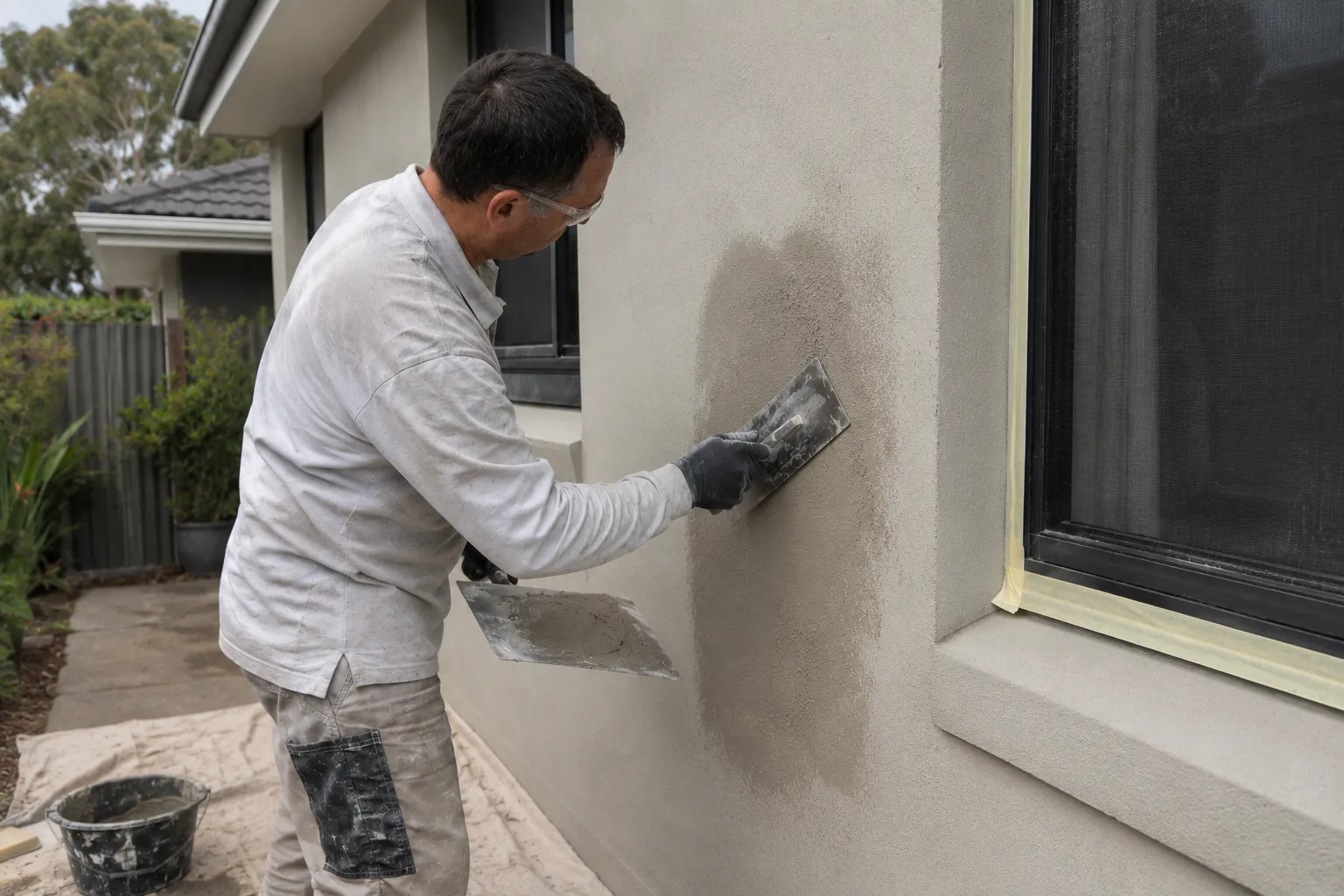
New render is applied in suitable coats and at the correct thickness for the chosen system. Each layer is allowed to cure appropriately, with protection from excessive heat, wind, direct sunlight or moisture where required.
The final finish is matched as closely as practical to the surrounding surface, including its texture, colour and detailing around corners, windows and doors. Proper preparation, application and curing help the repaired area remain securely bonded.
Risks of Leaving Hollow Render Untreated
Leaving hollow render untreated can allow a minor bonding issue to develop into cracking, moisture ingress or falling sections of render. The level of risk depends on how extensively the render has debonded and whether the underlying cause remains active.
Potential problems include:
- Cracking and detachment: Debonded render is more vulnerable to movement and impact, causing cracks to widen, bulges to develop and sections to detach. Falling render can pose a safety risk above entrances, paths and balconies. SafeWork NSW workplace guidance on managing the risk of falling objects includes restricting access and establishing exclusion zones until the hazard is controlled.
- Moisture ingress: Cracks and gaps can allow water to enter behind the render. Persistent moisture may cause staining, efflorescence and deterioration of the substrate.
- More extensive repairs: Small hollow patches can spread when the underlying cause is not addressed. A local repair may eventually become a larger removal and re-rendering project.
- Damage to underlying materials: Prolonged moisture or movement can affect backing coats, fixings and other materials behind the render, increasing the complexity of remedial work.
Early assessment allows unstable or damaged areas to be addressed before the problem becomes more extensive. It can also help avoid unnecessary removal where the existing render remains sound and stable.
How to Prevent the Render From Becoming Hollow Again?
Preventing render from becoming hollow again starts with fixing the cause of the original debonding rather than simply covering the damaged area. Proper substrate preparation, compatible materials, moisture control and correct curing all help maintain a strong bond between the render and wall.
Key steps include:
- Prepare the substrate properly: Remove dust, loose coatings, algae, salts and other contaminants before rendering. Cracks, damaged masonry and friable backing material should also be repaired first.
- Use compatible materials: The render system should suit the substrate, building construction and exposure conditions. Excessively rigid or incompatible materials can increase the risk of cracking and debonding.
- Apply the render correctly: Follow the recommended coat thickness and application method for the chosen system. Reinforcement mesh, beads and movement joints should be installed correctly where required.
- Control moisture: Maintain gutters, downpipes, flashings, copings and window seals to prevent water from entering behind the render. Existing damp or water ingress should be resolved before repairs are carried out.
- Allow proper curing: Protect fresh render from excessive heat, wind and direct sunlight where necessary. Manufacturer curing requirements should be followed for proprietary systems.
- Monitor repaired areas: Check for new cracks, staining, movement or changes in sound. Early investigation can prevent a small defect from developing into widespread debonding.
Preventing repeat failure means addressing the underlying cause as well as the visible damage. Careful preparation, suitable materials, moisture management and proper application can help the repaired render remain firmly bonded for longer.
A hollow-sounding render does not always mean that an entire wall needs to be stripped, but it should not be dismissed when accompanied by cracking, movement, bulging or moisture. BBS Rendering can assess the affected areas, identify potential causes and determine whether localised repairs or more extensive re-rendering is appropriate.
Early assessment can help prevent hollow areas from progressing into larger defects or falling sections. Addressing both the visible damage and the reason the render became detached provides a more reliable approach to restoring the wall's appearance, protection and long-term performance.

