
Cracks in cement render are common, but they should not always be dismissed as a cosmetic problem. Hairline fractures, wider cracks, bubbling paint and hollow-sounding areas can point to different causes, including building movement, moisture intrusion, poor surface preparation or incorrect application.
As a provider of cement rendering in Newcastle, BBS Rendering understands how coastal exposure, changing weather conditions and the age of local properties can affect rendered surfaces. Identifying the likely cause of cracking before carrying out repairs helps prevent repeated failure and protects the wall beneath the render.
Why Cement Render Cracks
Cement render forms a relatively rigid coating over masonry, concrete or another suitable substrate. Although it can tolerate normal weather exposure when correctly specified and applied, excessive movement, moisture or poor adhesion can cause the surface to crack.
Cracks may develop because of:
- Foundation settlement or wall movement
- Thermal expansion and contraction
- Moisture entering behind the render
- Poor substrate preparation
- Incorrect render thickness or mix proportions
- Inadequate curing
- Missing or bridged movement joints
- Salt exposure and repeated wetting and drying
A crack’s pattern can provide useful clues, but its appearance alone does not always confirm the cause. Its location, width, history and relationship to surrounding building elements should also be considered.
Wall Movement and Building Settlement
Wall movement is one of the most common reasons cement render cracks. When the structure beneath the render shifts, the rigid finish is forced to stretch or compress. Once that movement exceeds what the render can accommodate, hairline or wider cracks can begin to appear.
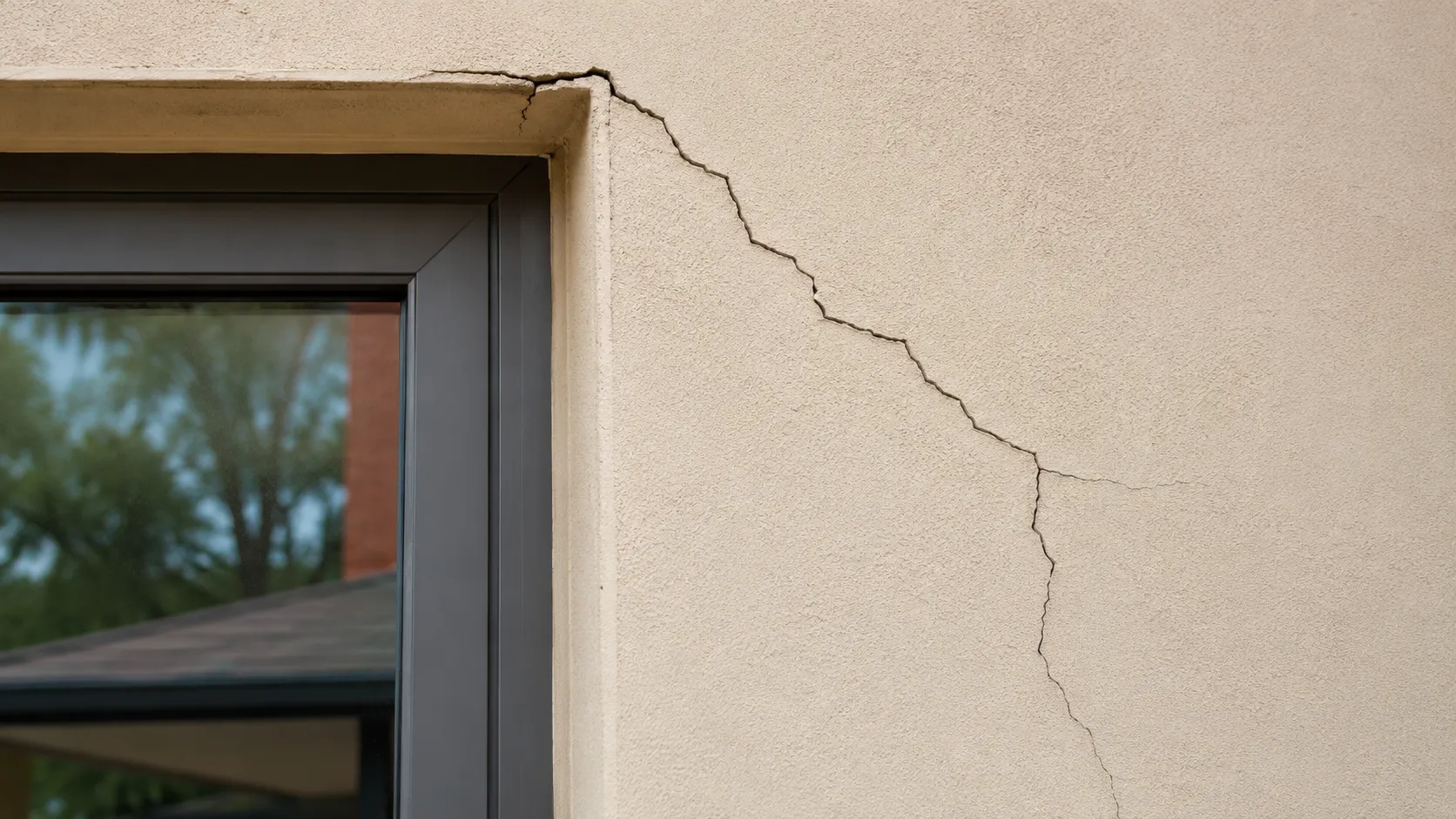
In Newcastle properties, movement may be influenced by soil behaviour, moisture changes, structural alterations and the age of the building.
Settlement-Related Cracks
Some settlement is common after construction as the ground and building materials adjust to their loads. Older properties may also experience movement where soil moisture changes, drainage problems or additions alter the pressure placed on the foundations.
When parts of a foundation move at different rates, stress can transfer through the brickwork or blockwork and into the render.
Possible signs of settlement-related movement include:
- Diagonal cracks extending from window or door corners
- Stepped cracking that follows mortar joints beneath the render
- Cracks that widen or taper along their length
- Cracks that return after previous patching
- Doors or windows that begin sticking near the affected wall
Reactive clay soils can swell during wet periods and shrink during prolonged dry conditions. This movement may affect footings and the walls above them. However, the crack pattern should be assessed together with other signs before settlement is assumed to be the cause.
Structural Alterations and Changing Loads
Wall movement does not only originate in the ground. Renovations and structural changes can alter the way loads pass through a building.
Changes that may contribute to movement include:
- Adding an upper storey
- Installing heavier roofing materials
- Removing or modifying load-bearing walls
- Constructing an extension beside an older building
- Creating larger window or door openings
Cracks commonly form where new work meets existing masonry or where different construction materials are joined. New brickwork, old masonry and framed walls can expand, contract and settle at different rates.
Movement joints should be positioned and detailed correctly so the building can move in controlled locations. If a joint is missing, poorly placed or covered with rigid render, stress may be released through random cracking.
Thermal Movement
Exterior walls heat up and cool down throughout the day. These temperature changes cause building materials to expand and contract.
Long walls, parapets and elevations exposed to strong sunlight are particularly vulnerable. If the render is too rigid or the wall lacks appropriately positioned movement joints, repeated thermal movement can produce fine cracking around corners, junctions and changes in wall thickness.
Correct joint placement, compatible render systems and appropriate coating products help reduce the risk of thermal cracking.
Moisture Behind the Render
Moisture intrusion is another common cause of cracked and deteriorating render. Once water enters the wall system, it can weaken the bond between the render and its substrate, carry salts through the masonry and contribute to bubbling, staining and hollow areas.
Moisture-related failure often begins at a localised defect rather than across the entire wall.
Common Water Entry Points
Water may enter behind render through:
- Poorly sealed window and door frames
- Cracked or missing sealant around service penetrations
- Leaking gutters or downpipes
- Failed roof, parapet or balcony flashings
- Cracked cappings and window sills
- Unsealed movement joints
- Existing cracks that have been left untreated
Some older window frames and wall junctions may not provide the same level of weatherproofing expected in newer construction. Correctly installed damp-proof courses and flashings help manage moisture and direct water away from vulnerable areas of masonry construction. Sealants and paint films can also degrade over time, particularly on walls exposed to wind-driven rain and coastal conditions.
Movement joints can become another entry point where they have been bridged with render or filled with a hard material instead of a compatible flexible sealant.
What Moisture Does to Render
Cement-based materials are porous and can absorb moisture. Repeated wetting and drying place stress on the render and may gradually weaken its bond with the wall.
Where salts are present in the masonry, moisture can carry them towards the surface. As the wall dries, the salts crystallise within or behind the render. This process can create pressure that contributes to flaking, blistering and debonding.
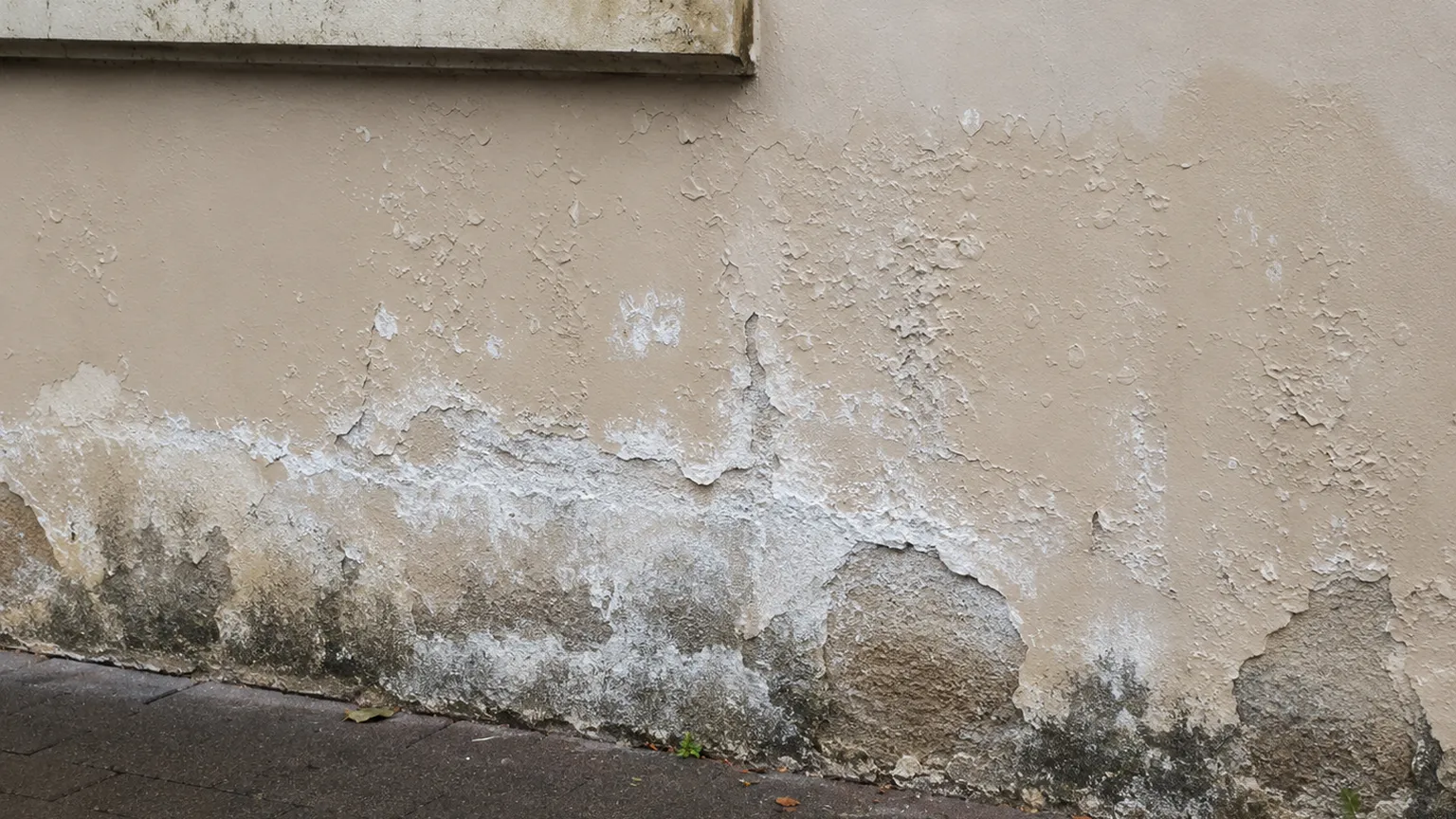
Homeowners should also understand how moisture and salt contribute to mould, stains and efflorescence on coastal render.
Affected areas may:
- Sound hollow or drummy when tapped
- Develop bubbling paint
- Show white salt deposits or efflorescence
- Produce dark streaks or damp patches
- Crack around the edges of loose sections
- Shed pieces of render
Shaded and south-facing walls may remain damp for longer, increasing the likelihood of algae, mould and coating deterioration.
The source of moisture must be identified and corrected before damaged render is repaired. Patching the surface without addressing leaking gutters, failed sealants or rising damp may only provide a temporary result.
Poor Surface Preparation and Application
Even a high-quality render product can fail when the underlying surface is unsuitable or the application process is rushed.
Preparation and installation requirements vary according to the substrate and the selected render system. Masonry, concrete, fibre cement and previously painted walls may all require different treatments.
Poor Substrate Preparation
Render needs to bond to a clean, stable and appropriately prepared surface. Adhesion can be compromised when the wall is dusty, oily, chalky, painted or covered with loose material.
Common preparation failures include:
- Applying render over flaking paint or loose existing render
- Failing to remove dust, oil, mould or algae
- Rendering over salt-contaminated masonry
- Applying render to a smooth or low-porosity surface without an approved preparation system
- Ignoring active dampness or water entry
- Using incompatible primers or bonding agents
The wall should be cleaned and prepared according to the substrate type and the render manufacturer’s specifications. Smooth or low-porosity surfaces may require mechanical preparation, an approved primer or a compatible key coat.
Where existing paint is present, it may need to be removed or tested to determine whether a suitable bonding system can be used.
Moisture and Suction Control
The moisture condition of the substrate can affect how render cures.
If porous masonry is excessively dry, it may draw water from fresh render too quickly. This can reduce workability and contribute to shrinkage cracking or poor adhesion. If the wall is saturated or affected by active dampness, the render may weaken, powder or fail to bond.
Potential problems include:
- Rendering over walls affected by leaking gutters or rising damp
- Applying render during very hot, dry or windy weather without suitable controls
- Failing to manage suction on highly porous brick or blockwork
- Blocking existing weep holes or drainage paths
- Applying coatings before the render has dried sufficiently
Highly porous masonry may require controlled dampening before application, but there should not be standing water on the surface. Active moisture and salt problems should be investigated and resolved before new render is installed.
Incorrect Mixing, Thickness and Curing
Cement render must be mixed, applied and cured correctly. Failure can occur when the material contains too much cement or water, is placed in overly thick coats or dries too quickly.
Common application problems include:
- Incorrect mix ratios
- Excessively thick coats
- Applying the next coat too early
- Inadequate curing
- Rendering during unsuitable weather
- Bridging structural movement joints
- Using a rigid system over a substrate that is likely to move
- Applying incompatible paints or coatings
Each layer should be installed at the specified thickness and allowed to firm or cure as required before the next stage begins. Movement joints in the building should be carried through the render system rather than covered.
Careful curing is particularly important during hot, dry or windy weather because rapid moisture loss can increase shrinkage and reduce the render’s long-term strength.
Coastal Weather and Salt Exposure
Newcastle’s coastal environment can place additional pressure on exterior render. Sea breezes, airborne salts, strong sunlight and wind-driven rain all contribute to surface deterioration.
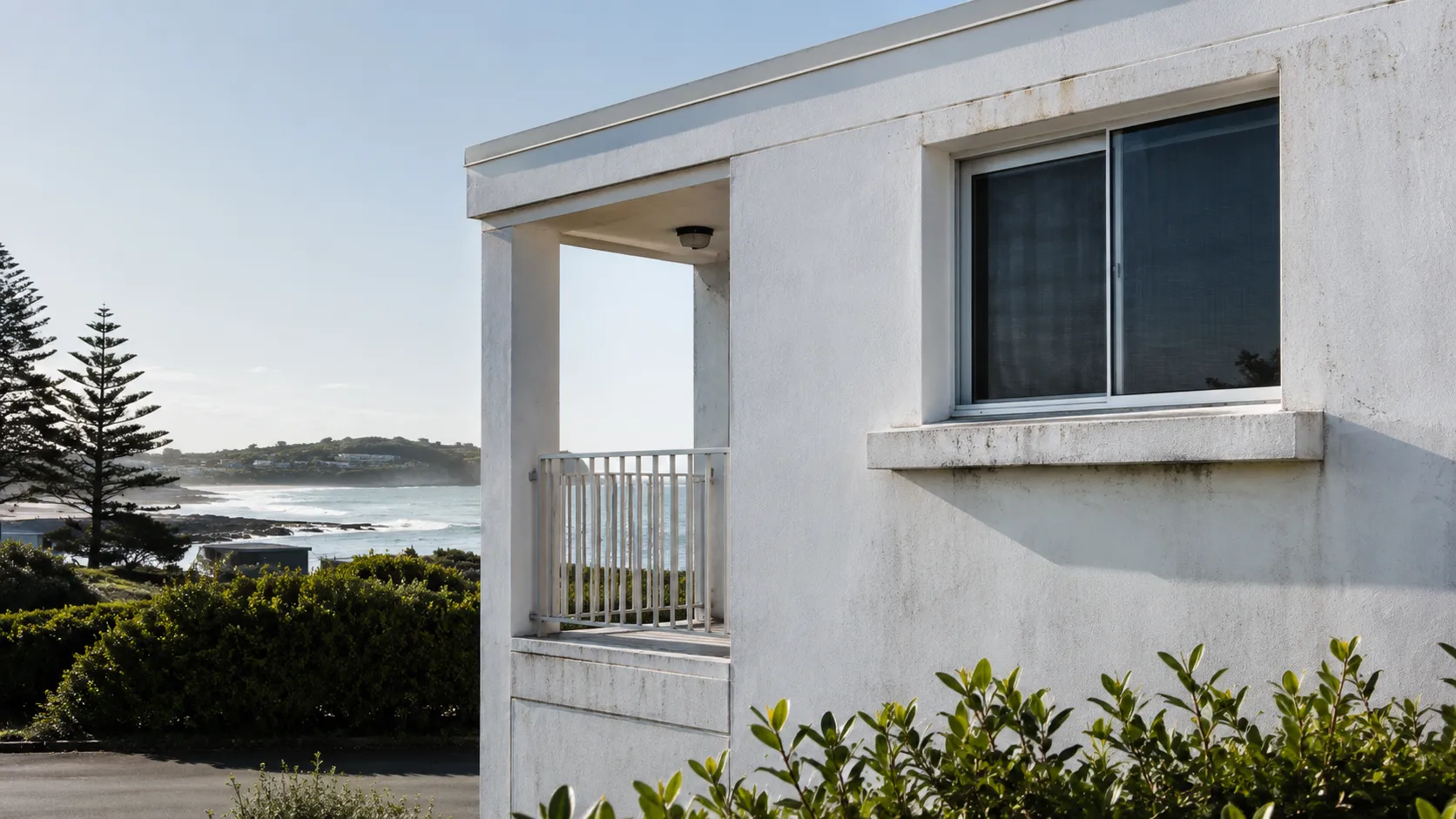
Cracking in coastal locations is often caused by several factors acting together rather than by salt exposure alone.
Salt-Related Deterioration
Salt carried in sea spray can settle on external walls and enter microscopic pores in the render. When the wall becomes damp, these salts dissolve into the moisture. As the surface dries, the salts crystallise again.
Repeated salt crystallisation may contribute to:
- Fine crazing across the surface
- Localised cracking around corners and edges
- Blistering or flaking coatings
- Surface erosion or spalling
- Hollow areas where the render has lost adhesion
Walls facing the ocean, elevated properties and areas around parapets, ledges and window sills may collect greater amounts of salt.
Wind-Driven Rain and Temperature Changes
Coastal winds can drive rain horizontally against walls, forcing water into small defects around windows, joints and penetrations.
Strong sunlight can then heat the same surface rapidly. Cooling sea breezes and evening temperature changes cause the wall materials to contract again. Over time, repeated heating and cooling can concentrate stress along joints, corners and changes in substrate.
Storm conditions can also expose weaknesses in sealants, flashings and coatings. Where render has already cracked or debonded, water intrusion may accelerate the damage.
Reducing Coastal Render Damage
Reducing weather-related deterioration begins with appropriate material selection and detailing.
Depending on the property and exposure level, this may involve:
- Selecting a render system suitable for the substrate and coastal environment
- Installing correctly positioned movement joints
- Using compatible exterior coatings or membrane systems
- Maintaining sealants around windows, doors and penetrations
- Repairing leaking gutters, downpipes and flashings
- Washing accessible salt deposits from exposed walls with fresh water
- Inspecting walls after severe storms
Maintenance should focus on preventing water from reaching the substrate rather than repeatedly covering cracks with rigid filler.
What Different Crack Patterns May Indicate
The pattern and location of a crack can help narrow down its likely cause.
Hairline and Map Cracking
Fine hairline cracks or widespread crazing may be associated with:
- Rapid drying
- Shrinkage during curing
- Excessively rich cement mixes
- Incorrect coat thickness
- Thermal movement
- Incompatible surface coatings
Hairline cracking may appear cosmetic, but it should be monitored where it is spreading, recurring or allowing moisture into the wall.
Diagonal and Stepped Cracks
Diagonal cracks around openings and stepped cracks that follow mortar joints may indicate movement in the underlying masonry.
Possible causes include:
- Foundation settlement
- Soil movement
- Changes in structural loads
- Movement around lintels or openings
- Differential movement between old and new construction
These patterns should not be covered without first establishing whether the wall is still moving.
Vertical Cracks at Junctions
Vertical cracks often form where:
- An extension meets the original building
- Masonry joins framed construction
- Wall thickness or height changes
- A movement joint is missing or has been covered
- Different materials expand and contract at different rates
A flexible joint or specialised repair system may be needed rather than a rigid patch.
Hollow or Drummy Areas
Render that sounds hollow when lightly tapped may have separated from the substrate. Debonding can be caused by poor preparation, moisture, salt contamination or movement.
Even if the surface has not yet cracked severely, detached render may eventually loosen and fall. Larger or elevated sections should be professionally assessed because of the risk to people and property below.
When Small Cracks Become a Bigger Problem
Minor cracks can widen when exposed to continuing movement, rain and salt. Once water reaches the substrate, the render no longer provides an effective protective finish.
Early warning signs include:
- Cracks becoming wider or longer
- New cracks appearing near an existing repair
- Damp patches or bubbling paint
- White salt deposits
- Hollow-sounding render
- Rust-coloured staining
- Crumbling or sandy crack edges
- Loose pieces of render
- Internal mould or moisture near the affected wall
Where reinforced concrete, metal lath, steel lintels or embedded fixings are present, persistent moisture may contribute to corrosion. Corroding metal expands and can place further pressure on surrounding render and masonry.
Ignoring these signs can allow a small repair to develop into more extensive work. The required repairs may progress from local crack treatment to removing and re-rendering entire wall sections.
When Professional Assessment Is Needed
Crack width can be useful information, but it should not be treated as the only measure of severity. A fine crack may require attention if it is active or admitting water, while a wider but stable surface crack may not indicate structural failure.
Professional assessment is recommended when cracks are:
- Widening or continuing to spread
- Returning after previous repairs
- Running diagonally from windows or doors
- Following mortar joints in a stepped pattern
- Extending across large sections of wall
- Associated with noticeable wall movement
- Located near balconies, parapets or structural openings
- Accompanied by dampness, rust staining or hollow render
An experienced renderer can assess the condition of the render and recommend suitable render repairs. The NSW Guide to Standards and Tolerances provides builders and property owners with a reference point for minimum technical standards in residential construction.
Where cracking appears connected to foundation movement, major structural alterations or significant masonry damage, assessment by an appropriately qualified builder, building consultant or structural engineer may also be required.
The underlying cause should be corrected before new render, fillers or coatings are applied.
Preventing Further Render Cracking
Not every crack can be prevented, particularly where a building continues to move. However, correct preparation, application and maintenance can substantially reduce the risk of premature failure.
Preventive measures include:
- Repairing water leaks promptly
- Maintaining gutters, downpipes and flashings
- Replacing failed sealants
- Keeping weep holes and drainage paths clear
- Using substrate-compatible render systems
- Following specified coat thicknesses and curing requirements
- Carrying movement joints through the render
- Selecting suitable exterior coatings
- Monitoring repaired areas for renewed movement
- Arranging early assessment when cracks change or spread
Cracked cement render is rarely caused by a single issue. Building movement, moisture, coastal exposure, substrate condition and workmanship can all contribute to deterioration.
For Newcastle homeowners, proper assessment and repairs that address the underlying cause are more effective than repeated surface patching. BBS Rendering provides professional rendering and remedial solutions designed to restore the appearance of rendered walls while improving their long-term durability.

