
When planning a house renovation, one of the first questions is how long the rendering work will take. The timeframe for rendering in Newcastle can vary depending on the property’s size, wall condition, chosen render system and weather conditions.
BBS Rendering can assess these factors to provide a clearer idea of the expected timeframe. Preparation, application, drying and curing all form part of the process, so the work may take several days or longer depending on the project.
Knowing what can affect the schedule helps property owners plan around other trades, access requirements and daily routines while allowing enough time for a durable, well-finished result.
How Long Does House Rendering Usually Take?
Most standard house rendering projects take around 5 to 14 days from preparation to completion. Smaller, straightforward properties may be finished closer to the lower end of this range, while larger or more complex homes can take longer.
The timeframe includes preparing the walls, applying the render and allowing sufficient time for each stage to dry and cure. Even a relatively small house may require several days to complete properly, as rushing between stages can affect the quality and durability of the finished surface.
What Affects the Rendering Timeframe?
The rendering timeframe can vary considerably between properties, even when they are a similar size. Various factors affect how quickly the work progresses. Some properties may require additional preparation or repairs before rendering can begin, while others may be more straightforward. Allowing for these factors helps establish a more realistic timeframe for the project.
Size and Access
Larger homes require more time, particularly where the exterior has multiple elevations, corners, gables or detailed features. Restricted access, extensions and difficult areas for scaffolding can also slow preparation and application.
Safe access should be planned carefully, following relevant scaffolding safety guidance where elevated or difficult-to-reach areas are involved.
Wall Condition
Sound, clean walls allow rendering to progress more efficiently. Cracked masonry, damaged areas, loose existing render, old coatings or damp can require additional preparation and repairs before new render is applied.
Weather and Render Type
Rain, high humidity, strong winds and extreme temperatures can delay application or extend drying times. The chosen render system also affects the schedule, as traditional sand and cement systems may require more coats and longer curing periods than some modern thin-coat systems.
The rendering timeframe depends on the property, wall condition, chosen render system and weather conditions. Allowing for these factors from the beginning helps create a more realistic schedule and reduces the risk of unexpected delays.
What Preparation Is Needed Before House Rendering?
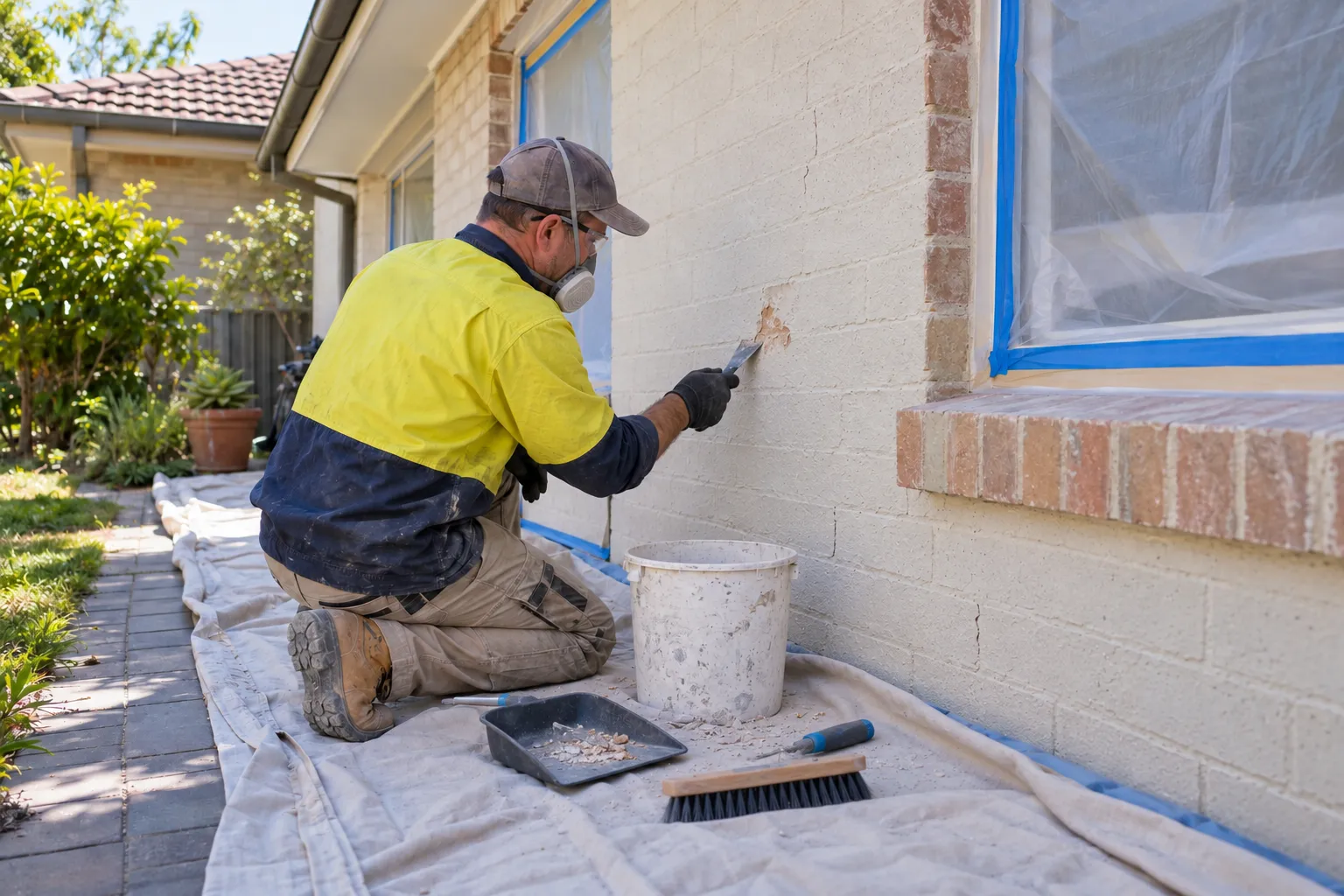
Before rendering properties, the walls need to be inspected, cleaned and prepared so the new render has a stable surface to bond to. The preparation required depends on the condition of the existing walls and the render system being used.
Following the correct render preparation process helps create a stable surface and reduces the risk of adhesion or cracking problems.
The main preparation steps are:
- Inspect the walls: Check for cracks, damaged masonry, loose render, flaking paint and other defects.
- Clean the surface: Remove dirt, dust, algae, loose material and failing coatings.
- Complete repairs: Repair cracks, damaged masonry and uneven areas. Reinforcing mesh or other treatments may be required in some areas.
- Protect surrounding areas: Cover windows, doors, paths and other nearby surfaces, then install scaffolding or access equipment where required.
- Prepare for the render system: Apply any required primer, bonding coat or other treatment before the base coat is installed.
Where existing coatings are present, whether it is possible to render over painted brick depends on the paint’s condition, adhesion and compatibility with the proposed system.
Proper preparation may add time to the project, where old render needs to be removed or repairs are required. However, completing these steps helps the render bond correctly and reduces the risk of problems with the finished surface.
How Long Does It Take to Prepare a House for Rendering?
Preparing a house for rendering typically takes one to several days, depending on the size and condition of the property. A house with sound walls, good access and only minor preparation may be ready within one to two working days.
More extensive preparation can take several additional days if old render needs to be removed or the walls require repairs. Cracked masonry, damaged pointing, uneven surfaces and other defects may need to be addressed before the new render can be applied.
The preparation timeframe should be based on the condition of the walls rather than a fixed schedule. Allowing enough time for cleaning, repairs, surface treatments and any necessary drying helps ensure the property is ready for the rendering stage.
Does the Type of Render Affect How Long the Job Takes?
Yes, the type of render can affect how long the job takes because different systems have different application methods, coat requirements and curing times. Traditional cement rendering is usually completed in multiple coats, which can extend the process because sufficient drying time is required between stages.
Monocouche and through-coloured renders can reduce finishing time because the colour is incorporated into the render, while silicone and other thin-coat systems can allow the final finish to be applied relatively quickly over a prepared basecoat. However, preparation and curing requirements still apply, so a faster application does not necessarily mean a shorter overall project.
The final timeframe also depends on the property’s size, substrate condition, access and weather. The manufacturer's requirements should determine drying and curing intervals rather than reducing these periods to speed up the work.
How Long Does Each Coat of Render Take to Dry?
Each coat of render needs sufficient time to dry and cure before the next stage begins. Under suitable conditions, a typical base or scratch coat may take around 24 to 48 hours, although thicker coats, traditional systems and unfavourable weather can extend this timeframe.
Base Coat Drying
The base coat needs to be sufficiently dry and stable before another layer is applied. While it may feel firm within 24 to 48 hours, the actual drying time can be longer depending on the coat thickness, substrate, temperature and humidity.
Time Between Coats
Traditional sand and cement render generally requires longer intervals because multiple coats are applied. Modern systems may have shorter application times, but each product has specific requirements that should be followed before the next layer is added.
Drying Conditions
Rain, high humidity, cool temperatures and limited airflow can slow drying, while excessive heat or strong winds can cause render to dry too quickly and increase the risk of cracking. Drying times should be based on the render system and actual site conditions rather than a fixed timeframe.
Allowing each coat to dry and cure properly helps create a stable surface for the next stage and reduces the risk of cracking or adhesion problems. Following the render system’s recommended drying times allows the project to progress without compromising the finished result.
How Weather Can Delay Rendering Work
Weather can significantly affect a rendering schedule, as rain, temperature, humidity and wind can influence application and curing. Poor conditions may require work to pause until the walls and render are suitable for the next stage.
Understanding how Newcastle weather conditions affect rendered surfaces can help property owners plan the work more effectively.
Rain and Humidity
Rain can prevent rendering from being applied to wet surfaces and may damage freshly applied coats. Prolonged wet weather can also slow drying, increasing the time between coats and potentially adding several days to the project.
Temperature
Very cold conditions can slow curing, while excessive heat and direct sunlight can cause render to dry too quickly. Work may need to be adjusted or delayed until temperatures and surface conditions are suitable.
Wind and Sun
Strong winds can accelerate drying, carry dust onto fresh render and make work around scaffolding more difficult. Protective measures can reduce exposure, but unsettled weather may still extend the overall timeframe.
Allowing some flexibility in the schedule helps account for changing weather conditions without compromising the quality or curing of the finished render.
Can Existing Render Increase the Project Timeframe?
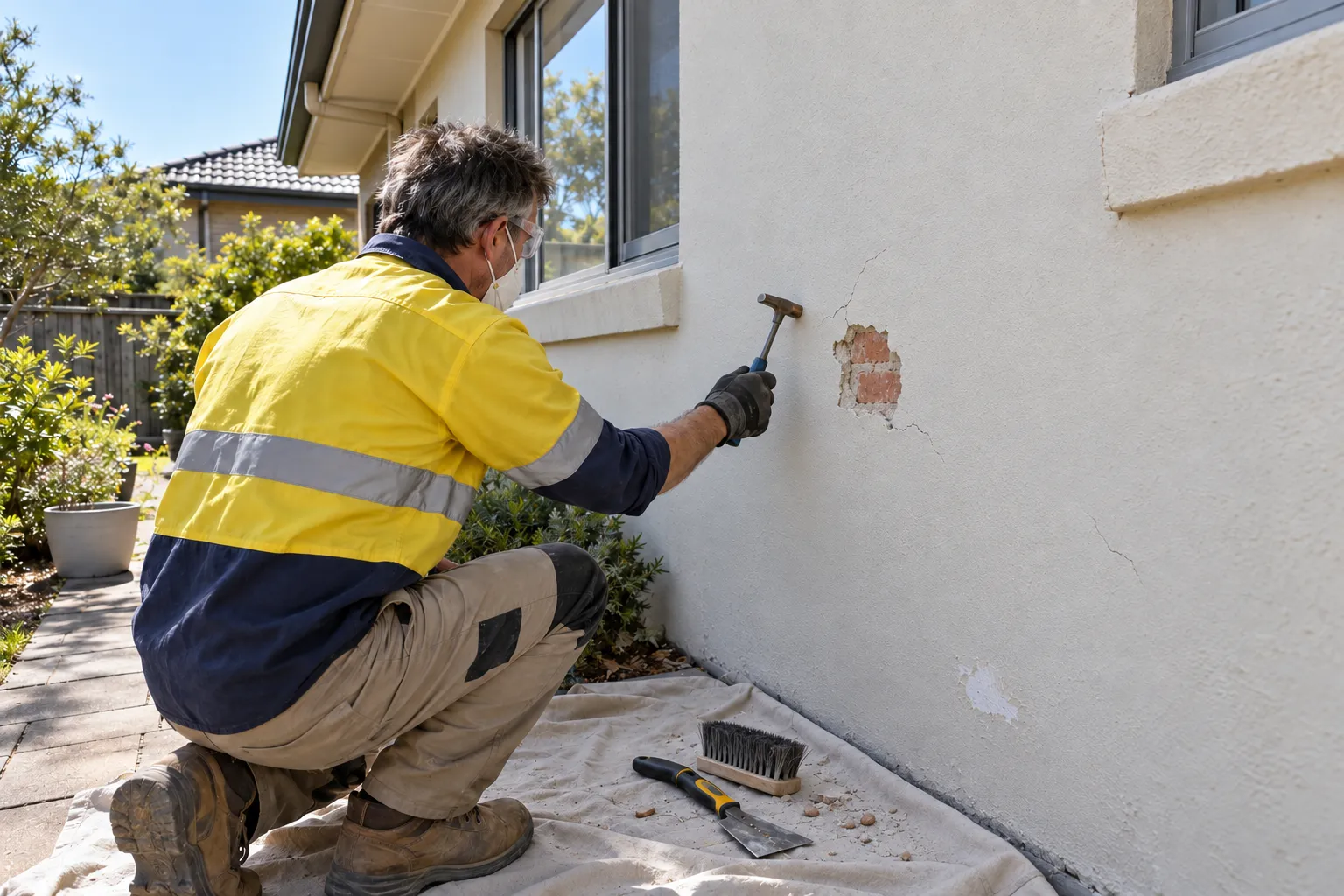
Yes, existing render can increase the project timeframe if it is cracked, loose, poorly bonded or otherwise unsuitable for the new render system. Damaged areas may need to be removed, while exposed masonry or other substrate may require repairs before new render can be applied. These additional steps can add several days to the project.
If the existing render is sound, stable and compatible with the new system, it may be possible to render over it after suitable cleaning and surface preparation. This can reduce the amount of work required compared with complete removal.
Assessing the existing render before work begins helps determine whether removal, repairs or surface preparation will be needed and provides a more realistic timeframe for the project.
How Long Before Render Is Fully Cured?
Render can feel dry within a few hours and become firm within a few days, but full curing can take around 28 days for traditional cement or sand and cement render. Modern systems such as monocouche, silicone and acrylic renders may have different curing requirements, so the manufacturer's recommendations should determine the appropriate timeframe.
Weather can also affect how quickly render cures. Cool, damp conditions can slow the process, while excessive heat or strong winds can cause the surface to dry too quickly. Allowing sufficient curing time before painting, installing fixtures or carrying out other work helps prevent moisture-related problems, cracking and damage to the finished surface.
When Can a Newly Rendered House Be Painted?
A newly rendered house should be allowed to dry and cure fully before painting. Traditional sand and cement render usually needs around 28 days before a suitable masonry paint is applied, while some modern render systems may allow earlier coating. Through-coloured monocouche and certain thin-coat systems may not require painting at all, as the colour and finish are incorporated into the render system.
The exact waiting period depends on the render type, thickness and weather conditions, so the manufacturer's recommendations should be followed. Painting before the render is sufficiently cured can trap moisture and contribute to peeling, blistering, staining or cracking. Allowing the correct curing time helps provide a stable surface for any subsequent coating.
The time needed to render a house depends on its size, wall condition, render system, access and weather. While a straightforward property may be completed within a few days, larger or more complex projects may take longer due to additional preparation, repairs and curing times.
BBS Rendering can assess the property and provide a realistic timeframe based on the work required. Proper planning, suitable materials and sufficient drying and curing time help keep the project on track while achieving a durable, high-quality finish without unnecessary delays.

