
When a painted brick facade begins to look dated, weathered or uneven, rendering is often considered as a way to achieve a cleaner and more contemporary finish. However, applying render over an existing painted surface is not always straightforward. For property owners considering rendering in Newcastle, understanding how painted brick interacts with modern render systems is essential before any work begins.
In some cases, painted brick can be rendered, but the paint must be firmly bonded, clean, stable and compatible with the chosen render system. If the paint is flaking, glossy, thick, non-breathable or trapping moisture, it usually needs to be removed before rendering can proceed. BBS Rendering assesses painted substrates to determine whether they can support a new render finish or require additional preparation.
This article explains the factors that determine whether painted brick can be successfully rendered. It also covers how existing paint is tested, how painted brick is prepared and when paint removal may be necessary to achieve a durable result.
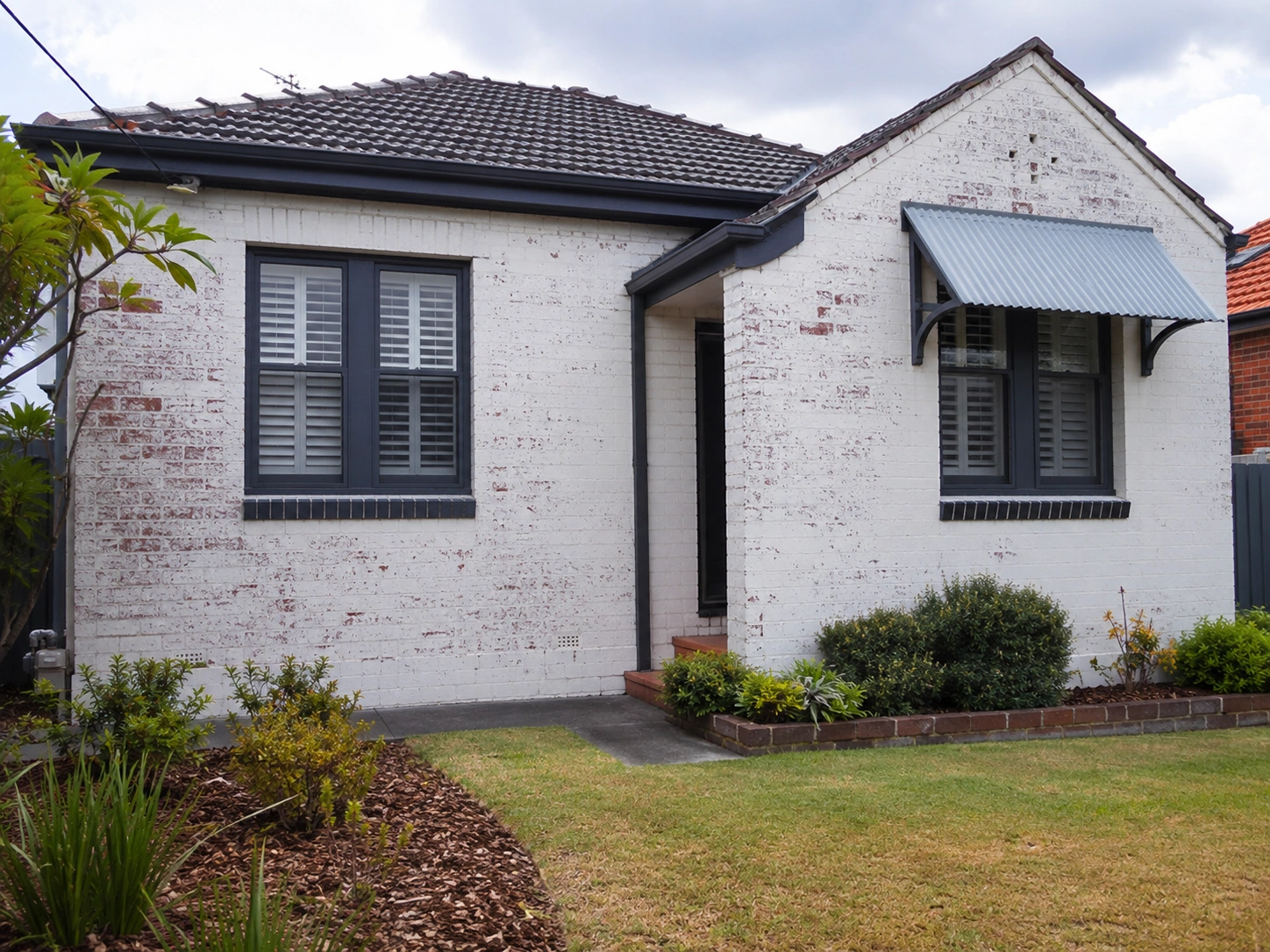
How to Check Whether the Existing Paint Is Suitable
Before applying render over painted brick, the existing coating must be assessed carefully. The goal is to confirm whether the paint is sound, firmly bonded and suitable for a render system to grip and perform correctly.
Several simple checks can help determine whether the paint can remain, needs partial removal or should be stripped completely. Taking time to test the surface properly reduces the risk of blistering, debonding and premature failure of the new render.
Visual Inspection and Soundness Checks
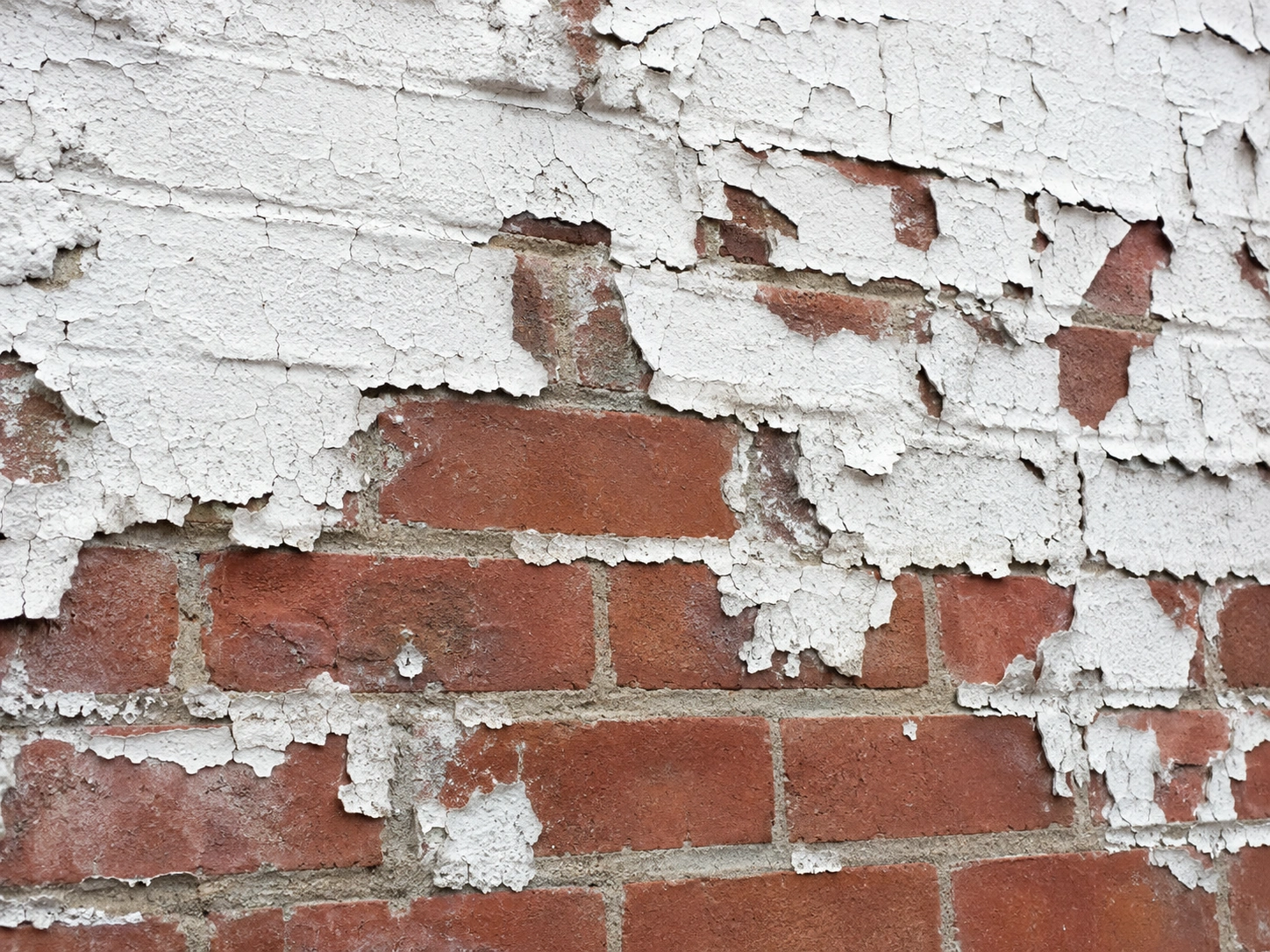
A visual inspection should begin with all elevations checked in good daylight. Look for defects such as flaking, peeling, blistering, crazing, hairline cracking, chalky surfaces and areas where bare brick is already visible. Any coating that is already failing is unlikely to provide a stable base for render.
A scraper or stiff filling knife can be used to lightly test suspect areas. If the paint lifts easily in sheets or continues to flake when feathered back, it is not a suitable surface to render over without further preparation. Extra attention should be given to areas around windows, doors, sills, copings and the base of walls, where moisture stress is often greater.
A basic adhesion test can also be carried out using strong masking tape or duct tape. The tape is pressed firmly onto the painted surface and pulled away sharply. If flakes of paint come away on the tape, the bond to the brick is weak and the surface should not be rendered without remedial work.
Tapping the surface with the handle of a screwdriver or small hammer can also reveal problems. A hollow, drummy or brittle sound may indicate debonded paint, loose render from previous repairs or weak areas beneath the coating. These areas need further investigation and are likely to require removal back to a solid substrate.
Porosity and Breathability Checks
Render generally performs best on absorbent or at least microporous backgrounds. Dense or fully sealed coatings can prevent proper bonding and may trap moisture behind the new render, leading to blistering, debonding, salt staining or substrate deterioration.
A simple water test can provide useful information. Using a spray bottle or sponge, wet a discreet area of the painted wall and observe how the surface reacts:
- If water is quickly absorbed and darkens the surface, the paint is relatively porous.
- If water beads, sits on the surface or runs off without soaking in, the coating is likely to be non-porous or highly water-repellent.
Gloss masonry paints, thick acrylic coatings and elastomeric systems are often unsuitable to render over without proper preparation or removal. These coatings can prevent the render from forming a reliable mechanical key.
Moisture meters can also help identify areas where damp may be trapped behind paint films. Persistently high readings, especially near the base of a wall, may indicate that moisture is already struggling to escape. This is a warning sign before adding a new render system over the top.
Identifying the Type and Age of Paint
Understanding the type of paint present helps determine whether it is compatible with rendering. Older mineral or limewash-type coatings are usually thinner and more breathable, which can make them more forgiving once loose material is removed. Standard masonry paints may sometimes be retained if they are firmly bonded, clean and not excessively thick.
Thick plastic-like coatings and multi-layer paint build-ups are more problematic. If several generations of paint are present, especially with visible ridges around cracks or edges, there is a greater risk that one of the lower layers has poor adhesion. In these cases, partial or full stripping is often the safer option.
Where there is uncertainty, a small test patch of the proposed render system can provide valuable information. If the basecoat cures evenly without pinholing, blistering or edge lifting, there may be more confidence that the remaining paint can be retained. However, a test patch should only be used as part of a broader assessment, not as the only deciding factor.
How Painted Brick Is Prepared Before Rendering
Painted brick must be properly prepared before any render is applied. Preparation focuses on removing weak or incompatible coatings, stabilising the background and creating a surface that provides adequate keying and adhesion for the new render.
The level of preparation depends on the condition of the paint, the type of render system being used and whether there are any underlying moisture or movement issues. In most cases, the aim is either to fully remove the paint or prove that any remaining coating is sound, firmly bonded and compatible with the chosen render system.
Cleaning, Stripping and Surface Repair
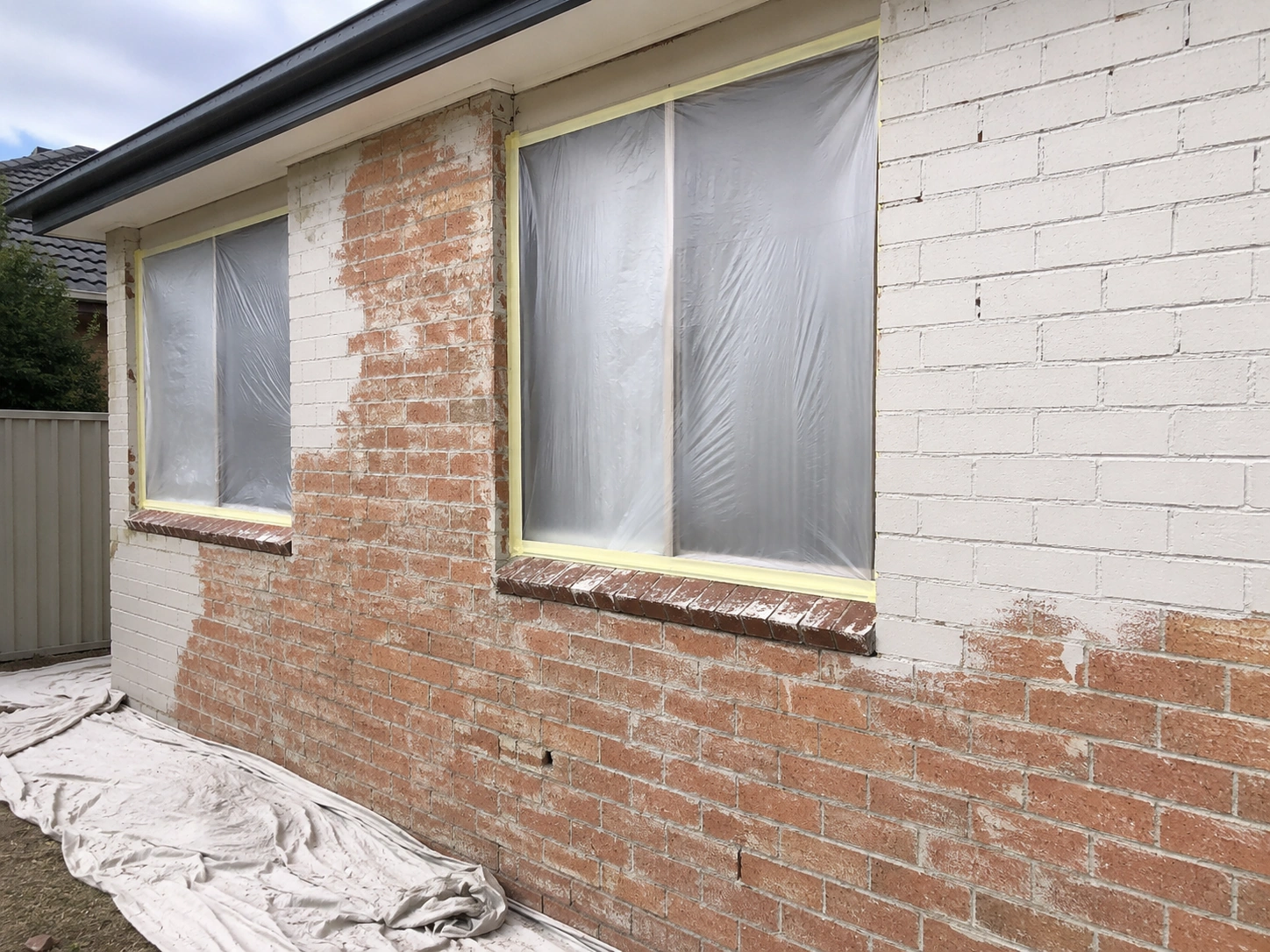
Once the condition of the paint is understood, the surface must be cleaned. Dust, traffic film, algae, loose debris and other contaminants are removed using suitable detergent cleaning and low- to medium-pressure washing. Where organic growth is present, a biocidal wash may be applied to reduce the risk of it reappearing beneath the render.
Unsound or incompatible paint must be stripped back to a stable surface. Depending on the wall condition and coating type, this may involve:
- Careful mechanical abrasion or sanding
- Steam cleaning systems
- Approved chemical paint removers where appropriate
High-pressure washing should be used carefully, especially on older or softer brickwork, as it can erode mortar joints and drive water into the wall.
After paint removal, defective mortar joints should be raked out and repointed. Spalled bricks may need to be replaced or repaired with compatible repair mortars. The objective is to create a firm, stable and reasonably even substrate without hollow, friable or loose areas.
Creating a Suitable Key for New Render
Once the surface is clean and sound, the next step is to create an adequate key for the chosen render system. Even where some sound paint remains, light mechanical abrasion may be used to roughen the surface and improve the bond.
A compatible primer or bonding agent is then applied according to the render manufacturer’s specification. This is especially important on smooth, low-suction or mixed backgrounds because it helps the render grip properly and controls suction so the material does not dry too quickly in patches.
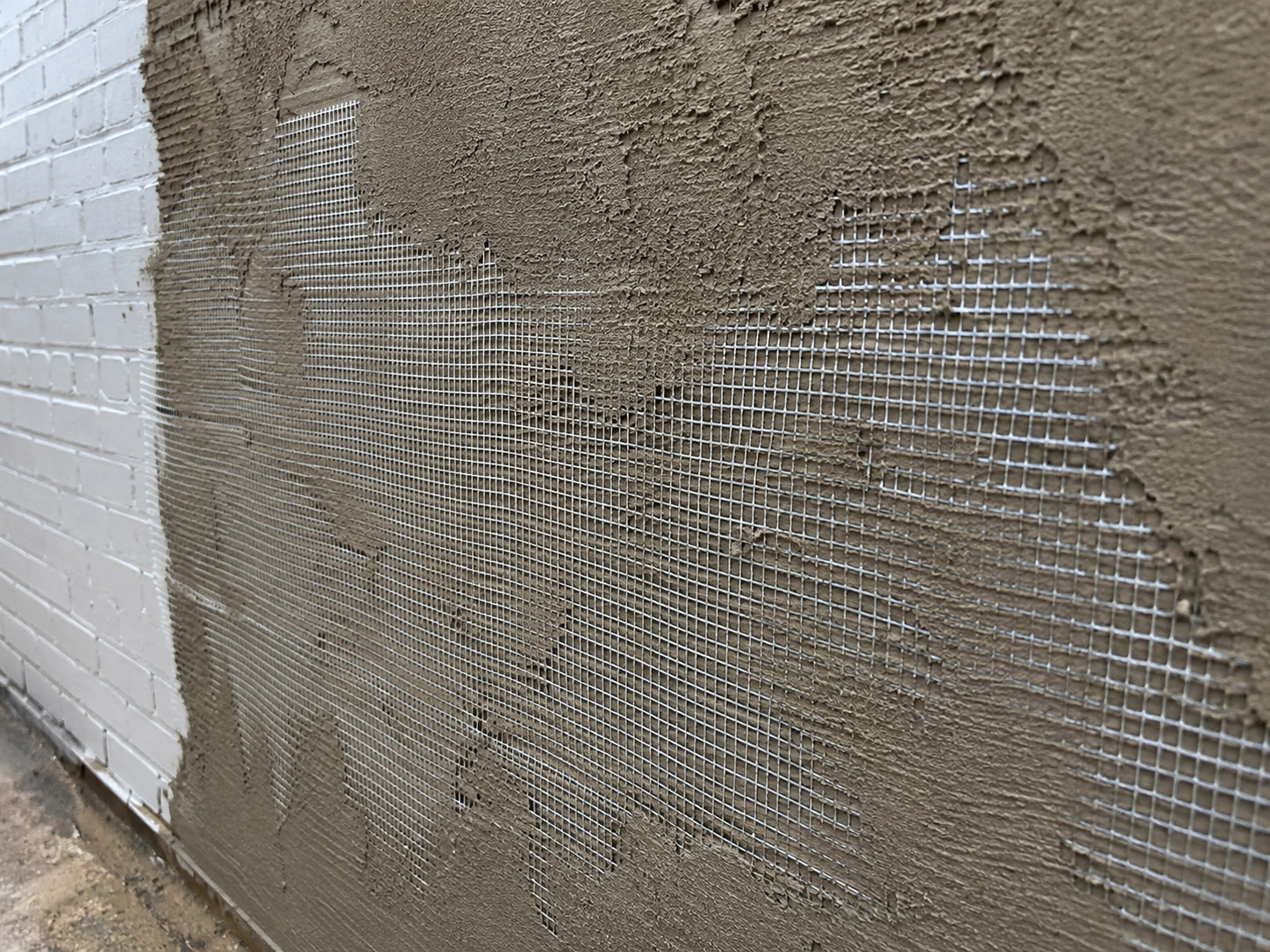
In many systems, a basecoat with reinforcing mesh is installed over the prepared painted brick. Reinforcement helps bridge minor cracks, spread stresses and reduce the risk of movement between the original wall and the new render build-up causing visible cracking in the finish.
When the Paint Needs to Be Removed
Paint removal becomes necessary when the existing coating prevents a strong bond between the render and the brick. In some cases, render will not adhere properly to the painted surface at all. In others, it may appear stable at first but fail later as the paint begins to peel or release underneath.
The key question is not simply whether the bricks are painted. It is whether the paint is sound, compatible and limited enough for a secure mechanical key to be created. If those conditions are not met, stripping the paint is usually the safest professional option.
Situations Where Paint Must Be Stripped
Paint removal is normally required when one or more of the following issues are present:
- Large areas of flaking, blistering or hollow-sounding paint
- Multiple thick layers of old coatings
- Glossy, plasticky or highly water-repellent surfaces
- Non-breathable paints on damp or previously saturated walls
- Unknown or incompatible coatings, such as old bituminous coatings or some elastomeric systems
If the paint is debonding from the brick, the render will only ever be as strong as that weakest layer. Rendering over the top risks widespread delamination.
Extensive hairline cracking in the paint can also be a warning sign. It may indicate movement, moisture stress or coating breakdown. Rendering over these areas without proper preparation can lock in moisture and contribute to further failure of both the paint and the brickwork.
Assessing Adhesion Before Deciding
An adhesion assessment should be carried out before deciding whether paint can stay or must be removed. A cross-hatch cut test or pull-off test can show how firmly the coating is bonded. If the paint comes away in sheets, curls at the edges or lifts significantly after testing, it is not suitable as a substrate.
Hand scraping is another useful indicator. If a steel scraper or stiff wire brush easily lifts the paint back to bare brick, the coating cannot be considered sound enough to support render.
The amount of remaining paint also matters. If large areas of brick are already exposed and only patches of marginal paint remain, it is usually more effective to strip the surface fully rather than try to treat small sections individually. This helps create a more consistent background for the render system.
Practical Considerations Before Removal
Where paint removal is required, the method must be chosen carefully to protect the brickwork and surrounding areas. High-pressure washing can damage softer masonry and drive water into the wall if used incorrectly. Chemical strippers may leave residues that interfere with render adhesion if they are not neutralised and rinsed properly.
Mechanical methods, such as controlled abrasive cleaning or specialist sanding systems, can be effective for stubborn coatings but must be adjusted to suit the brick type. Overly aggressive removal can scour the brick face or weaken mortar joints.
Once the paint has been removed, the bricks need adequate drying time. Any dust, residue or loose material must also be brushed or washed away so that primers, bonding coats and basecoats can bond directly to clean masonry.
Rendering over painted brick can be effective, but the success of the finish depends on the condition of the existing coating. Paint that is loose, glossy, non-breathable or affected by moisture can cause the new render to fail.
Careful testing, surface preparation and the correct primer or render system are essential before work begins. For painted brick homes in Newcastle, a professional assessment helps determine whether the wall can be rendered safely or whether paint removal is needed first.

